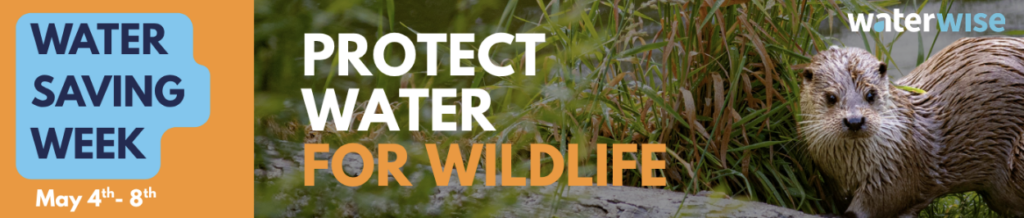
It’s Water Saving Week (4–8 May 2026), and this year’s theme from Waterwise is Protect Water for Wildlife. At SWA, we’ve just become a Waterwise Water Guardian, and we think this is one of those sustainability conversations the wedding industry doesn’t have nearly enough. So let’s change that.
Why water matters in a wedding business
Water might not be the first thing that comes to mind when you think about sustainable weddings. Carbon, floristry, fast fashion, single-use plastic, these tend to dominate the conversation. But water runs through almost everything we do.
Fresh flowers are one of the most water-intensive products on the planet. Cotton for table linen and wedding dresses requires enormous quantities of water to produce. Catering — from washing vegetables to running dishwashers to boiling water for 150 cups of tea uses far more than most people realise. Venue grounds need irrigation. Bathrooms get heavy use on a wedding day. Bridal suite showers run long.
And here’s the thing: every drop of water used in a hospitality or events setting is water drawn from the same rivers, reservoirs and aquifers that our wildlife depends on. Waterwise this year is partnering with The Rivers Trust and WildFish to highlight what’s actually at stake. Over 10% of the UK’s freshwater and wetland species are under threat. Otters, salmon, dragonflies, water voles, they all need healthy rivers to survive. When demand is high and water levels drop, it’s these habitats that suffer first.
That’s not a guilt trip. That’s just the connection we want you to see.
The good news. You don’t need to transform your business overnight. Most of what we’re sharing here is practical, low-cost, and genuinely doable. Whether you’re a solo florist, a venue manager, a caterer, or a wedding planner. Progress over perfection, as always.
Here are the areas to focus on, with specific actions for each:
1. Your venue or workspace
This is often where the biggest water savings are hiding and where leaks are most commonly missed.
- Check for leaks. A dripping tap that loses one drop per second wastes around 5,500 litres of water per year. A leaky toilet can waste 200–400 litres every single day (enough to fill a small swimming pool in a week) and most people never notice. Do a quick check of all taps, toilets and outdoor pipes. If you manage or work closely with a venue, ask them when they last checked.
- Install aerators on taps. These small, inexpensive devices mix air into the water flow, reducing the volume used without changing the pressure. Many venues don’t have them and don’t know they exist. A set costs very little and can cut tap water use significantly.
- Ask venues about their water monitoring. As a wedding planner or supplier, this is a question you can add to your venue vetting process. Do they measure their water consumption? Do they have a water efficiency plan? It’s a simple question that positions you as someone who takes this seriously and nudges venues to think about it too.
2. Catering
Whether you’re a caterer yourself or working alongside one, food preparation and service is one of the highest water-use areas on any wedding day.
- Only run dishwashers on full loads. A half-empty commercial dishwasher uses exactly the same water as a full one. Build this into your team’s operating procedure.
- Defrost food in the fridge overnight rather than running it under a cold tap. This saves litres every time.
- Wash fruit and vegetables in a bowl rather than under a running tap, then use that water on any outdoor plants or venue gardens.
- Serve water thoughtfully. Pre-filling water jugs for tables rather than leaving taps running, and having a clear plan for what happens to leftover drinks, reduces waste significantly. Leftover ice? Water it into flower arrangements or outdoor pots.
- Choose locally sourced, seasonal menus. The water footprint of food varies enormously by origin and type. Seasonal British produce requires far less water to grow and transport than imported alternatives. This is already a popular sustainability choice for weddings, and water efficiency is one more reason to recommend it.
3. Floristry
Floristry has a complicated relationship with water. Flowers need it to stay fresh, but the industry also uses it heavily for cleaning, conditioning and growing.
- Use a bucket system for stem conditioning rather than running a tap. Fill once, use fully.
- Source from UK or local growers where possible. Imported flowers (particularly those flown in from Kenya or the Netherlands) carry a significant embedded water footprint from irrigation. British-grown seasonal flowers use considerably less.
- Compost used flowers and use grey water on plants. Water used to condition flowers can often be used again on outdoor plantings. Check it isn’t treated with chemicals first.
- Choose flowers that need less water to grow. Wildflowers, British meadow varieties, and drought-tolerant species like lavender, achillea, and echinacea are naturally less water-intensive, and increasingly popular for their relaxed, natural aesthetic.
4. Textiles and dressmaking
If you work with fabric (whether as a dressmaker, stylist, or retailer) water is embedded in your supply chain in ways that aren’t always visible.
- Natural fibres vary enormously in water footprint. Conventional cotton is one of the thirstiest crops on earth. Organic cotton, linen, and hemp require significantly less. When sourcing fabrics or recommending them to couples, this is worth factoring in.
- Encourage re-wearing, hiring and second-hand. The most sustainable dress is one that already exists. Every time a dress is hired instead of bought new, or worn again, the water used to produce it is shared across more occasions. This is a message worth weaving into how you talk about sustainable wedding fashion.
- Wash samples and stock at lower temperatures and full loads. Cooler washes save both water and energy, and in most cases clean just as effectively.
5. Day-to-day business habits
These apply whether you’re working from home, a studio, or a shared space.
- Turn off taps properly. It sounds obvious, but in a busy studio or home office it’s easy to let taps drip. Make it a habit.
- Only boil what you need. Filling a full kettle every time uses more water and more energy. Fill it for the cups you’re actually making.
- Use a chilled jug in the fridge. No more running the tap waiting for cold water. Fill a jug, keep it cold, and you’ve removed a daily water waste habit entirely.
- Fix things fast. Whether it’s a dripping tap at home or a garden hose fitting that doesn’t quite seal, fix it this week. It’s one of the highest-impact, lowest-effort changes on the list.
How to go further
If this week has sparked something for you, here are a few ways to keep the momentum going:
- Become a Waterwise Water Guardian. It costs just £20 for the year and shows your commitment to water efficiency. SWA has just joined — and we’d love more of our members alongside us. Visit waterwise.org.uk/become-a-water-guardian
- Try the Water Impact Widget. Waterwise’s free calculator shows you the impact of your habits in just a few clicks. A great tool to share with couples too. Find it at waterwise.org.uk/water-calculator
- Add water questions to your client process. Ask couples about venue water monitoring, encourage seasonal British floristry, suggest plant-based or low-water menus. Small questions, embedded in your existing process, add up to industry-wide change.
The bigger picture
The wedding industry touches hundreds of suppliers, venues, couples and guests every year. If we collectively start asking better questions about water, of our suppliers, our venues, our growing practices, we become part of the solution.
You don’t have to be an expert. You don’t have to have all the answers. You just have to start somewhere. That’s what Water Saving Week is about. And that’s what SWA is about too. Progress over perfection. Every time. 💙
Find out more and access free resources at waterwise.org.uk/campaign/water-saving-week-2026
Ready to go further?
Tips like these are just the beginning. Inside the Sustainable Wedding Alliance, our members get access to a growing library of practical resources, training, and a community of like-minded wedding professionals who are all on the same journey, sharing what works, asking questions without judgement, and making progress at their own pace. Whether you’re just starting to think about sustainability in your business or you’re ready to pursue accreditation, there’s a place for you here. We’re not about perfection. We’re about progress, and we’d love to support yours. Find out more and join us 💚