In the heart of the UK’s vibrant wedding and events industry, we are in the business of creating memories that last a lifetime. But as we look toward the future, there is a growing realisation that the legacy of our businesses must extend beyond beautiful photographs and happy clients. It must also include a commitment to the planet.
For many small businesses, the term “Net Zero” can feel like a mountain too high to climb. However, the journey starts with a single step, and often, that step involves understanding carbon offsetting. Whether you are a studio florist, a rural wedding venue, or a freelance photographer, this guide will demystify the world of offsetting and show you how to use it ethically as part of your sustainability toolkit.
What Exactly is Carbon Offsetting?
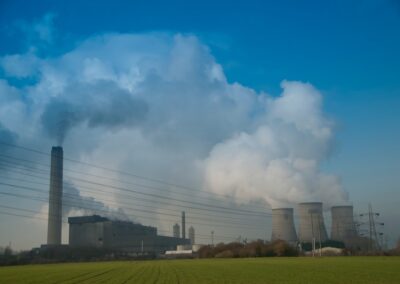
At its simplest, carbon offsetting is a way for a business to compensate for its environmental impact by funding projects that reduce or remove carbon dioxide (CO2) from the atmosphere elsewhere.
Think of it like a set of traditional weighing scales. On one side, you have the carbon emissions your business produces – through heating your studio, driving to venues, or the “Scope 3” emissions tied to your supply chain. On the other side, you place “offsets” – credits purchased from projects like reforestation, wind farms, or methane capture, to bring those scales back into balance.
However, a word of caution: Offsetting is not a “get out of jail free” card. It is the final piece of the puzzle, intended to tackle the “residual” emissions that you cannot yet eliminate through efficiency or switching to renewables.
The First Step: Know Your Numbers
Before you can offset, you must measure. You cannot balance scales if you don’t know how much weight is on the other side.
For UK small businesses, we highly recommend using the SME Climate Hub. This is a fantastic, free resource backed by the UK government and the UN. It provides a dedicated carbon calculator designed specifically for smaller organisations, helping you map out your Scope 1, 2, and 3 emissions.
Measuring your footprint often provides a “lightbulb moment.” You might discover that your largest impact isn’t your electricity bill, but actually your business travel or the waste from your floral installations. Measuring helps you identify where to cut costs and carbon simultaneously.
Navigating the Jargon: Verified Standards
The carbon market can feel like the “Wild West” if you don’t know what to look for. To ensure the money you invest actually helps the planet (and to avoid accusations of “greenwashing”), you must only purchase credits from projects that adhere to rigorous, internationally recognised standards.
When reviewing an offsetting provider, look for these three gold-standard certifications:
- 1. Gold Standard Voluntary Emission Reductions (VER)
Widely considered the most stringent standard, the Gold Standard was established by NGOs like the WWF. Projects under this banner must not only reduce carbon but also contribute to at least three UN Sustainable Development Goals, such as improving local health or providing clean water.
- 2. Verified Carbon Standard (VCS)
Managed by Verra, the VCS is the world’s most widely used voluntary greenhouse gas programme. It ensures that carbon reductions are “real, measurable, additional, and permanent.”
- 3. United Nations Certified Emission Reductions (CER)
These credits are generated through the UN’s Clean Development Mechanism (CDM). They are highly regulated and transparent, allowing you to track exactly which project your funds are supporting. You can find these via the UN Carbon Offset Platform.
Types of Offsetting Projects
Not all offsets are created equal. Projects generally fall into two categories:
- Avoidance/Reduction: These prevent new emissions from entering the atmosphere. Examples include building a wind farm in a region that previously relied on coal, or providing energy-efficient cookstoves to communities to reduce deforestation.
- Removal/Sequestration: These actively pull CO2 out of the sky. The most common is tree planting (afforestation), but it also includes high-tech solutions like Direct Air Capture (DAC).
While planting trees is incredibly inspiring and great for biodiversity, remember that trees take decades to reach their full carbon-absorbing potential. A balanced portfolio that includes both immediate avoidance and long-term removal is often the most effective approach [Ecologi Whitepaper].
Why Should a UK Wedding Business Offset their Carbon Emissions?
Aside from the obvious environmental benefit, there are compelling business reasons to engage with this process:
- 1. Client Demand: Couples in 2026 are increasingly looking for “Carbon Neutral” or “Climate Positive” suppliers. Being able to show a offsetting certificate could be the deciding factor for a conscious couple choosing between two businesses.
- 2. Attracting Talent: Employees want to work for businesses with purpose. Showing that you care about your footprint helps you hire and retain the best talent.
- 3. Future-Proofing: UK regulations are tightening. By measuring and offsetting now, you are staying ahead of the curve and ensuring your business is resilient to future carbon taxes or reporting requirements [FSB Guide].
Action Plan for Small Businesses
If you’re ready to start, follow these steps:
- 1. Reduce First: Look at your SME Climate Hub report. Can you switch to a green energy provider? Can you source more local flowers to cut down on air miles? Reduction is always better than offsetting.
- 2. Choose a Reputable Partner: Don’t just click on the first “plant a tree” ad you see. Use established UK providers like Ecologi, Carbon Footprint Ltd, or Carbon Neutral Britain.
- 3. Check for “Additionality”: This is a key term in offsetting. It means the project would *not* have happened without the financial support from your carbon credits. If a forest was already protected by law, buying credits for it doesn’t provide “additional” benefit to the planet.
- 4. Be Transparent: Share your journey on your website. Don’t claim to be “perfect.” Instead, say: *”We have reduced our emissions by 20% this year, and we are offsetting the remaining 80% through Gold Standard wind projects in India while we work on further reductions.”*
Final Thoughts: Progress Over Perfection
As small business owners, we often feel the weight of responsibility to do everything right. But when it comes to the climate crisis, the world doesn’t need a handful of people doing sustainability perfectly; it needs millions of us doing it imperfectly.
Carbon offsetting is a bridge. It allows us to take responsibility for our impact today while we build the cleaner, greener businesses of tomorrow. By measuring your footprint with the SME Climate Hub and choosing verified, high-quality offsets, you aren’t just checking a box, you are investing in a world where weddings and celebrations can continue to thrive for generations to come.
Sources & Further Reading:
FSB Carbon Offsetting Guide: Small Business Carbon Guide
Ecologi Whitepaper: The Path to Net Zero
Carbon Neutral Britain: Business Certification
SME Climate Hub: Measurement Tools
Gold Standard: Verified Projects
Verra (VCS): Standard Information